
Playground risk
Letting go is scary

I’ve been reading the book The Mighty Red by Louise Erdich and it’s been making me think about risk during adolescence. Slight spoiler: there is terrible accident involving alcohol and vehicles that shapes many of the characters’ lives. Anecdotally, tragic accidents seem all too common among adolescents and teenagers. I remember how reckless and overconfident I was as a teenager and I wonder, how can I help my future teenagers stay safe without overprotecting them?
Of course risk and danger are constants in growing up. For children, they provide valuable learning lessons and for parents they cause worry and stress. Taking risks also helps children build confidence, learn their limits and gain new skills. Anyone who has watched their baby go from moving safely on all fours to wobbly standing understands that skills aren’t built without the danger of falling and by actually falling so often.
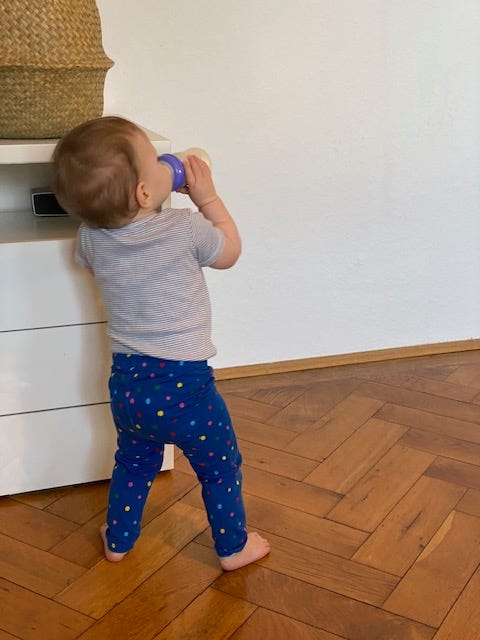
As kids grow, the stakes just get higher. First it’s just falling on their cushy, diapered bottom. Then, maybe it’s falling off a play structure they are climbing, onto the ground that has likely been artificially softened. Or maybe it’s a slight burn on their finger when they insist on testing the temperature of the oven rather than listening to an oft-repeated warning. And so on and so on until they are of legal age for operating something like a bike, or a car.
As a parent, this often feels like the hardest part of the job. You have let them take these risks, potentially do something dangerous and encourage them to learn, really learn something, for themselves.
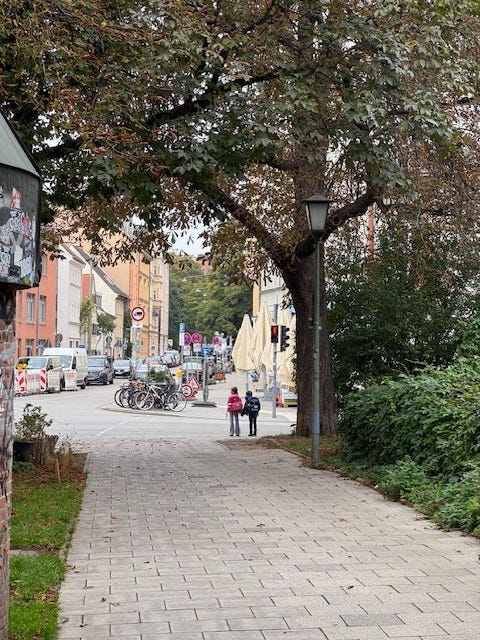
I’ve also been thinking about this in the context of my 6 year old starting school and starting to walk around city neighborhood independent of adults as she transfers from school to afternoon care. It’s become popular to give kids her age “dumb” smart watches. Basically these watches only have a GPS and give the child an ability to call just you. Part of me thinks, yes, she and I both need this security. Part of me also thinks would it be better for her to learn her lesson getting lost if she gets too overconfident and strays too far, while shes in our safe neighborhood, rather somewhere she’s never been?
Maybe this would be an easier decision if we lived in a smaller village with smaller boundaries. But in a large, albeit incredibly safe city like Munich, should I also give her the option to call me when she is really lost and scared? And if I do give her a watch, is it possible for her to learn her lesson if I am an easy phone call away? Am I taking away a risk that would help her long term?
Until now, the biggest risks we have allowed as parents have been on playgrounds. German playgrounds are specially designed to help kids manage danger and risk. There are sometimes really tall climbing structures - like 5 stories high - but you cannot climb these until you are sufficiently tall and capable. This safety feature is baked into the design of the playground by ensuring that only children big enough and strong enough to climb the whole thing can even get onto the first row of ropes or part of the climbing structure.
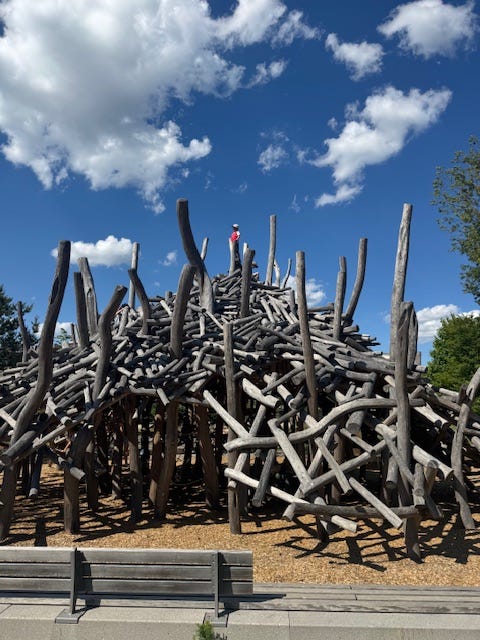
Moreover, if there is a particularly tall or steep slide, the playground will also be designed in a way that it is difficult to access the top of the slide without sufficient gross motor skills. In this way, the little ones are safe - they can’t even get to the part where you would slide.
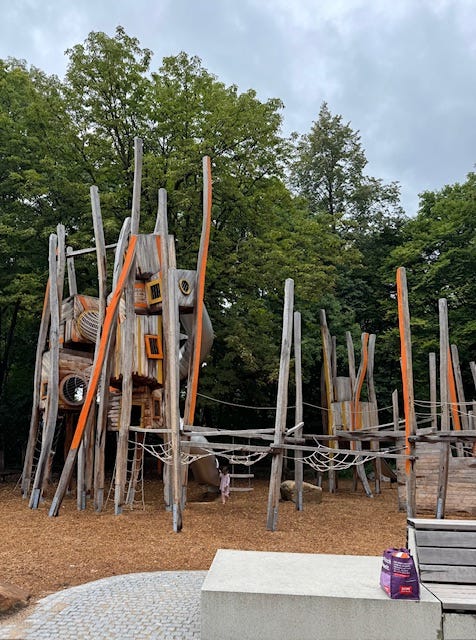
A big part of German kid life is going to these playgrounds and testing your skills and your limits daily. It wasn’t so scary as a parent when they were climbing maybe 10 feet off the ground with a lower rope system they would fall onto. But as they get older, and there are fewer guardrails, and I am glad they have already experienced some risk, learned from some bad decisions and understand why it’s good to respect their physical limits.
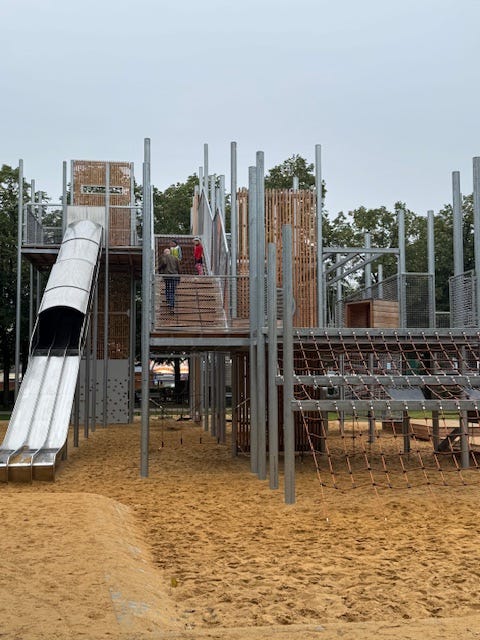
For myself too, I’m glad German playgrounds have given me the experience of letting my kids move about the world out of my control. I do find it hard to let my child walk through our neighborhood without adult supervision and I know letting go will never get easier. But I comfort myself by knowing that she well understands her own limits because she’s had years of testing them at playgrounds. Just like she learned that no one could rescue her if she got herself stuck up high on a climbing structure, she already knows that she needs to take care with this new freedom. As hard as it is for me, I can already see her self-confidence growing and maturity developing, so I am feeling grateful for the German playgrounds where this started.